
Loading...
Serving Danville, IL and surrounding areas. (217) 444-0284
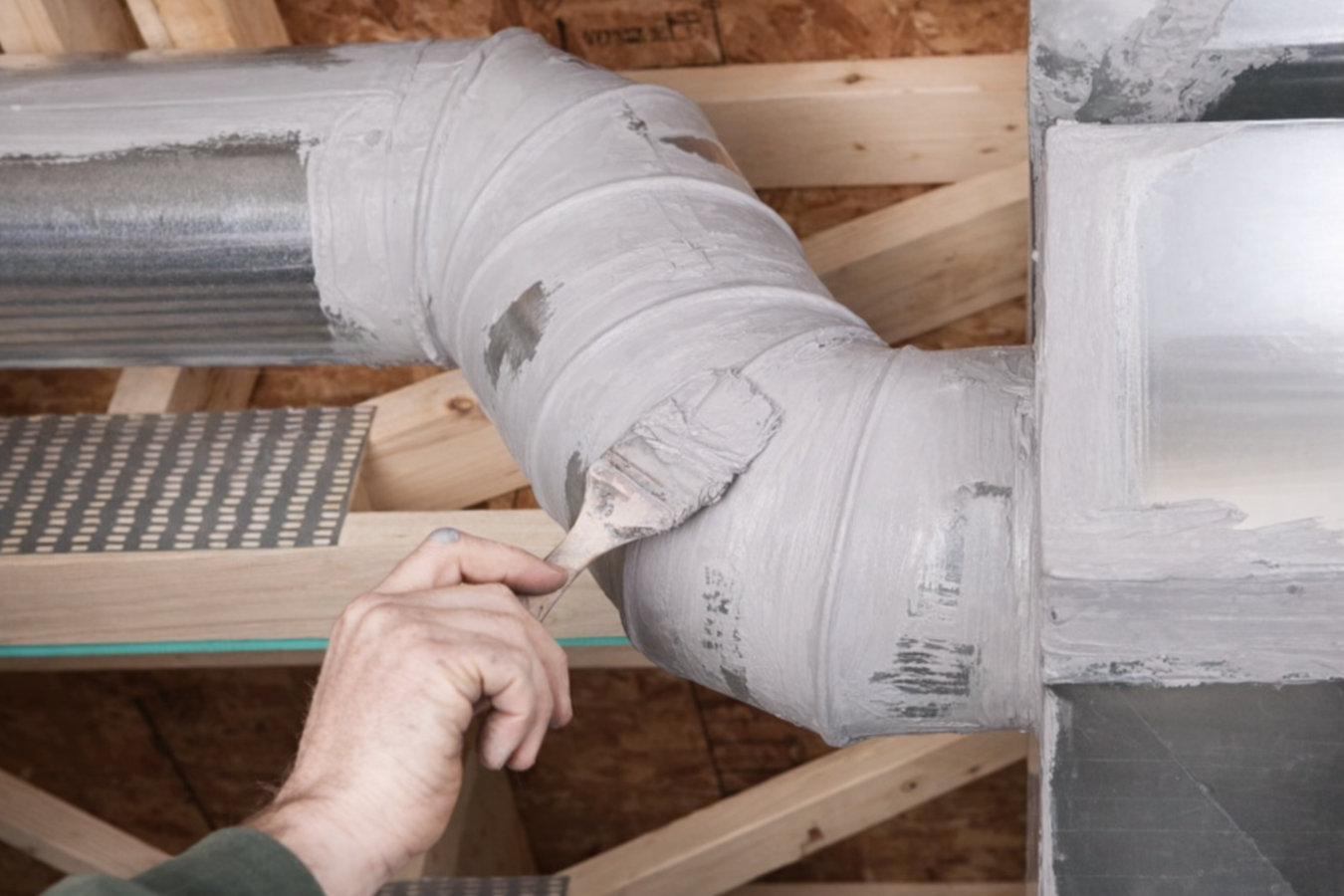
If your furnace runs constantly but your home never quite reaches the right temperature, hidden gaps and cracks are likely the cause. We find them, seal them, and give you measurable proof the work made a difference.
Air sealing in Danville means finding and closing the hidden gaps, cracks, and openings where outside air enters and conditioned air escapes. These gaps are often tucked behind walls, around pipes, above ceiling fixtures, and along the rim joist above the foundation. Most whole-home air sealing jobs take one to two days with minimal disruption to your living space.
Air sealing and insulation work together - insulation slows heat transfer through the wall material, while air sealing stops air from moving around the insulation through gaps entirely. Pairing this service with basement insulation addresses two of the biggest sources of heat loss in older Danville homes in a single project.
The U.S. Department of Energy estimates that air leaks account for 25 to 40 percent of the energy used for heating and cooling in a typical home. In Danville's climate - where you are running heat from October through April and air conditioning through the summer - that is a meaningful portion of your annual utility bill.
If your utility bills feel out of proportion to what your neighbors pay, air leakage is one of the first things worth investigating. In Danville's climate, where you are running heat from October through April and air conditioning all summer, a leaky home pushes your HVAC system much harder than necessary. A noticeably high bill in January or July is a strong signal that conditioned air is escaping somewhere.
Hold your hand near an electrical outlet on an exterior wall on a cold day. If you feel cool air, that outlet connects to a gap that goes all the way outside. The same test works near the bottom of walls, around window frames, and along door edges. In Danville's older housing stock, these gaps are extremely common individually - but they add up fast when you total them across the whole house.
If one bedroom is freezing in winter or one area of the house never cools down in summer, that often points to air leakage nearby rather than a problem with your HVAC system. In older Danville homes, this commonly shows up in rooms over a garage, above a crawl space, or at the far end of the house from the furnace. The conditioned air is escaping before it can do its job.
When outside air moves freely in and out of your home through gaps near the foundation, it brings moisture with it - especially during Danville's humid summers. That moisture causes musty odors, condensation on pipes, and over time can create conditions that encourage mold. If your basement or crawl space smells damp, air sealing that area is often part of the solution.
We approach air sealing systematically - starting with a blower door test to measure exactly how much air your home is leaking, then working through the attic floor, rim joist above the foundation, and any penetrations where pipes, wires, or ducts pass through ceilings and walls. We use spray foam for larger gaps, caulk for stationary cracks, and weatherstripping for moving parts like door edges. After the work is complete, we run the blower door test again to show you the before-and-after improvement in black and white. For homes where the attic is a major source of leakage, we frequently pair this service with attic air sealing to address the top of the thermal envelope in detail.
For older Danville homes where both insulation and air leakage are problems, we can combine air sealing with basement insulation in a single visit so you address the two biggest sources of heat loss at once rather than scheduling two separate projects.
Best for homeowners with high energy bills or drafts throughout the house who want a complete assessment and fix in one project.
Targets the gaps at the top of your home's thermal envelope - around light fixtures, plumbing stacks, and where interior walls meet the attic floor.
Closes the gap at the very bottom of your walls just above the foundation - one of the most common sources of cold air infiltration in Danville's older homes.
For homeowners who need both services - sealing the gaps and filling the cavities in one coordinated visit is more efficient than scheduling separately.
Danville sits in Vermilion County in east-central Illinois, where winters regularly drop below 20 degrees and summers push into the 90s with high humidity. That wide temperature swing means your home is constantly fighting to hold its temperature in both directions - and every gap in the shell of your house makes that fight harder and more expensive. A large share of Danville's housing was built before the 1970s, when energy efficiency was not a priority in construction. Homes built before that era were designed to breathe, which in practice means they leak air freely through gaps that were never sealed. Homeowners in Tilton and Rantoul deal with the same older housing challenges and we serve both communities regularly.
Danville is also served by Ameren Illinois, which runs an energy efficiency rebate program that can put money back in your pocket when you complete qualifying improvements. The rebate amounts and eligibility rules change from year to year, so it is worth asking your contractor to walk you through what is currently available before you sign anything. Getting this right at the start - not after - is the only way to make sure you do not miss out. For homeowners who want to go further, the ENERGY STAR program offers guidance on what a properly sealed home looks like and what kind of savings you can expect.
We ask about your home's age, what you have been experiencing, and the best time to come out. You will hear back within one business day to schedule the in-home assessment at no cost.
We place a large fan in your doorway to depressurize the house and measure exactly where air is moving in or out. This gives you a precise picture of the problem before any work begins - and a real number to compare against after.
After the assessment, you receive a written estimate covering what was found, what we plan to do, and the total cost. We also walk you through any current Ameren Illinois rebates that apply to your project before you sign anything.
The crew works through the attic, basement, and foundation area, sealing gaps with foam, caulk, and weatherstripping. Most jobs finish in one to two days. We run the blower door test again at the end so you can see the improvement in measurable terms.
Free blower door assessment. Written estimate. Ameren rebates reviewed upfront. We respond within one business day.
(217) 444-0284We measure your home's air leakage before we start and again after we finish, so you have a real number showing the improvement - not just our word for it. That documentation is also useful if you ever sell your home or claim a federal energy efficiency tax credit.
Danville is served by Ameren Illinois, which offers rebates for qualifying air sealing work. We walk you through what is currently available before the job begins so you do not miss out on money that is already on the table. Rebate programs change every year - asking after the fact rarely helps.
Many Danville homes sit on crawl spaces or have unfinished basements with exposed rim joists - the framing just above the foundation walls. These areas are among the biggest sources of cold air infiltration in central Illinois homes, and they are the spots most often skipped by contractors who do not specialize in this work.
Most of our work is in homes built before 1980, which means we understand the construction patterns, the common gap locations, and the materials that work best in these older structures. A contractor who works mostly on new construction will approach your 1950s ranch differently than we do.
Every one of those points adds up to a contractor who does measurable, documented work - not just a crew that shows up, uses some foam, and leaves. Call us to schedule your assessment or submit a request online.
Add insulation to your basement walls and rim joist to stop cold air from entering at the base of your home.
Learn MoreTarget the gaps at the top of your thermal envelope - around fixtures, plumbing stacks, and interior partition walls - before adding insulation.
Learn MoreFall appointments fill up fast - lock in your date before the heating season starts and spots are gone.