
Loading...
Serving Danville, IL and surrounding areas. (217) 444-0284
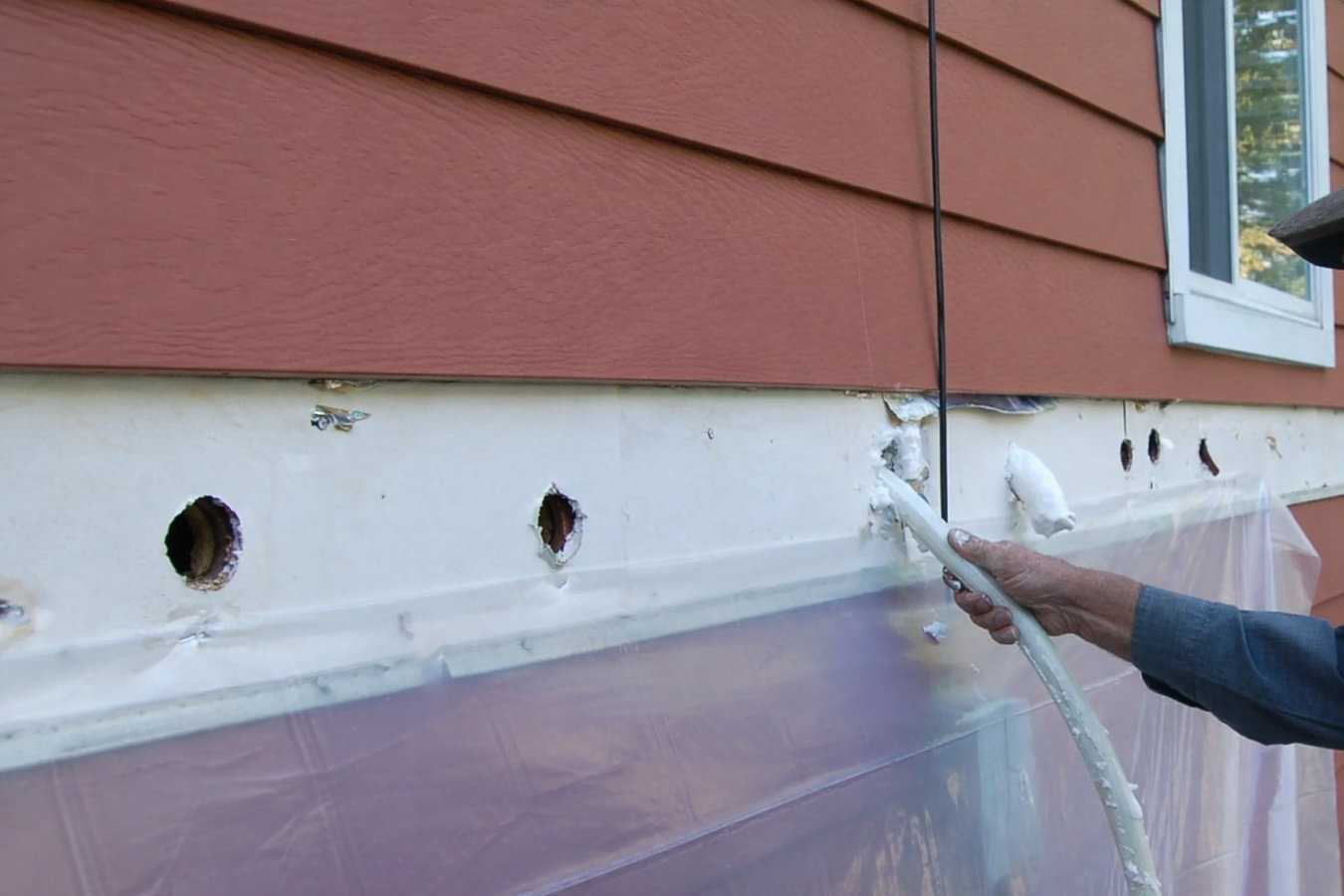
If your Danville home was built before 1980, it almost certainly does not have enough insulation to handle Illinois winters efficiently. Retrofit insulation adds what is missing - without tearing out walls or doing major work.
Retrofit insulation means adding insulation to a home that is already built - without tearing out walls or doing major construction. Contractors blow, spray, or pack insulation material into existing attics, wall cavities, crawl spaces, and rim joists through access points that are already there or through small openings that get patched when the work is done. Most single-family jobs in Danville are completed in one to two days with no need to leave your home.
A large share of Danville homes were built in the 1920s through 1960s, when insulation standards were minimal or simply did not exist. Many have little to no wall insulation and only a thin layer in the attic - if any. That means the improvement in comfort and energy savings from retrofit work tends to be dramatic here, because the starting point is so low. Homeowners in Danville who have never had insulation upgraded often describe the difference as night and day after a properly done job.
Retrofit insulation works best when paired with spray foam insulation for rim joists and tight crawl space areas, and with home insulation services for homeowners who want a comprehensive review of their entire building envelope rather than addressing one area at a time.
If your gas or electric bill spikes from November through February and stays high no matter how carefully you manage the thermostat, your home is losing heat faster than your furnace can replace it. In Danville, where temperatures regularly drop below freezing for weeks at a time, a poorly insulated home works your heating system hard - and shows up clearly on your utility bills every single month of winter.
If one room - often a corner bedroom, a room above the garage, or a room above the crawl space - never gets comfortable no matter how high you set the heat, the walls or floor beneath it are letting cold in. This is especially common in Danville homes built before 1970, where wall insulation was either never installed or has settled and thinned over decades. A bigger heater does not fix this problem - filling the gap that is letting the cold in does.
If you can look into your attic and see the tops of the wooden joists poking above the insulation, you do not have enough. Proper insulation for Illinois winters should cover those joists completely and sit well above them. Many Danville homes built before 1980 have only a thin, compressed layer of original insulation - far less than what is needed to hold heat during a Danville winter.
If walking barefoot in your home in January feels like walking on a cold slab, the space below your floors likely needs attention. In Danville, many homes sit over crawl spaces where cold air pools in winter and works its way up through the floor. This is a direct sign that the crawl space walls or floor are uninsulated - and it is one of the most noticeable improvements homeowners feel after retrofit work.
We approach retrofit work by identifying where the most heat loss is happening first and prioritizing that area. In most Danville homes, that is the attic - and in most cases, we seal air gaps before adding insulation, because sealing without insulating gives you partial results, and insulating without sealing first leaves real performance on the table. For attic work, we use blown-in fiberglass or cellulose depending on the situation, laid in an even layer that covers the joists completely. For crawl spaces and rim joists, spray foam often performs best because it creates an airtight seal in spaces where blown-in material would leave gaps.
For homeowners who want to address the full picture, we often pair retrofit insulation with spray foam insulation for rim joists and hard-to-reach areas, and with home insulation services when the goal is a comprehensive upgrade across multiple areas of the house at once. Doing attic, wall, and crawl space work in a single project window typically produces a more noticeable improvement than spreading the work across multiple visits.
Best for homes where attic loss is the primary problem - air sealed first, then blown-in insulation added to bring the attic up to current performance levels for Illinois winters.
For older Danville homes with uninsulated exterior walls - small holes drilled from inside or outside, insulation blown in under pressure to fully pack the cavity, then patched so the repair is invisible.
For homes losing heat through the floor - spray foam or rigid insulation applied to crawl space walls and rim joists to stop cold air from pooling below the living space in winter.
For homeowners who want to address the attic, walls, and crawl space in a single coordinated project - the most thorough approach for older Danville homes starting from a low baseline.
Danville sits in DOE Climate Zone 5, which means homes here need a higher level of insulation than homes in warmer states. Illinois winters bring long stretches of below-freezing temperatures, and a home that was built in the 1940s or 1950s - when insulation standards were minimal - is working against those conditions with almost nothing in place. A large share of Danville's housing stock was built between the 1920s and 1960s, which means a large share of Danville homeowners are paying more to heat and cool their homes than they should be. Homeowners in Rantoul and Hoopeston with similarly aged housing stock see the same patterns.
Ameren Illinois serves Danville and runs an energy efficiency rebate program that includes incentives for insulation upgrades. Depending on the scope of your project and your home's current insulation level, you may qualify for rebates that reduce your out-of-pocket cost. The federal government also offers tax credits for qualifying energy efficiency improvements. A contractor familiar with both programs can help you understand what you qualify for and handle the documentation. Crawl spaces are a particular concern in this area - many Danville homes have them, and an uninsulated crawl space in an Illinois winter makes floors feel like ice and forces your furnace to work overtime to compensate.
Reach out by phone or through our contact form and we will respond within one business day. We will ask about your home age, size, and what has been bothering you - cold rooms, high bills, drafty floors. You do not need to know anything technical before this conversation.
A contractor visits your home - typically spending time in the attic, crawl space, or wherever the work is likely to happen. They check how much insulation is already there, identify any air leaks that should be sealed first, and look for moisture or pest issues that need to be addressed before new material goes in. This visit usually takes 30 to 60 minutes.
After the assessment, you receive a written estimate explaining what work is recommended, where it will be done, and the total cost. This is the right time to ask about Ameren Illinois rebates - a good contractor will tell you whether your project qualifies and what documentation you will need. Take your time; there is no pressure to commit on the spot.
On the work day, the crew sets up equipment - usually outside or in the attic - and installs the insulation. Air sealing comes first when it is part of the scope. When finished, they walk you through the completed work, clean up any debris from the access area, and give you any documentation needed for rebate and tax credit claims.
No pressure, no commitment. We will assess what your home actually needs, give you a written quote, and tell you exactly what Ameren Illinois rebates you may qualify for.
(217) 444-0284Adding insulation over an unsealed attic leaves performance on the table. We complete air sealing as the first step whenever it is part of the scope, so the insulation goes on top of a properly sealed surface. Homeowners who have had insulation added before without this step notice the difference when the job is done correctly.
Homes built before 1960 in Danville have specific characteristics - original plaster walls, older framing, and crawl spaces that were never designed with moisture control in mind. We know how these homes are built and what approaches work for them, because we have done this work in this area, not somewhere with different construction patterns.
Danville is in Ameren Illinois territory, and we know their rebate program requirements well. We also help homeowners understand the federal tax credits available for qualifying energy efficiency improvements. Leaving rebate and credit money unclaimed is a common outcome when a contractor is not familiar with the local programs - we make sure that does not happen. Ameren Illinois rebate programs.
Blown-in fiberglass, cellulose, spray foam, and dense-pack all have different strengths in different applications. We use the right material for each area of the home - not a one-size approach - and we select products that hold up in Illinois's combination of cold winters, hot humid summers, and seasonal moisture cycles. NAIMA insulation industry standards.
Older Danville homes starting from a low insulation baseline tend to see some of the largest improvements after retrofit work - because there is so much room to gain. We are here to help you capture that improvement without surprises.
Two-component spray foam for rim joists, crawl space walls, and irregular cavities where blown-in material would leave gaps - the most airtight option for hard-to-reach spaces.
Learn MoreA comprehensive review of your entire home's insulation needs - attic, walls, crawl space, and basement - coordinated as a single project for the most complete upgrade.
Learn MoreInsulation projects scheduled before the cold weather hits give you the full first-winter benefit - and our schedule fills up fast in the fall.