
Loading...
Serving Danville, IL and surrounding areas. (217) 444-0284
Custom Danville Insulation delivers blown-in insulation, spray foam, and crawl space work to Hoopeston homeowners - we have served Vermilion County since 2018 and reply to every new inquiry within one business day.
Custom Danville Insulation delivers blown-in insulation, spray foam, and crawl space work to Hoopeston homeowners - we have served Vermilion County since 2018 and reply to every new inquiry within one business day.
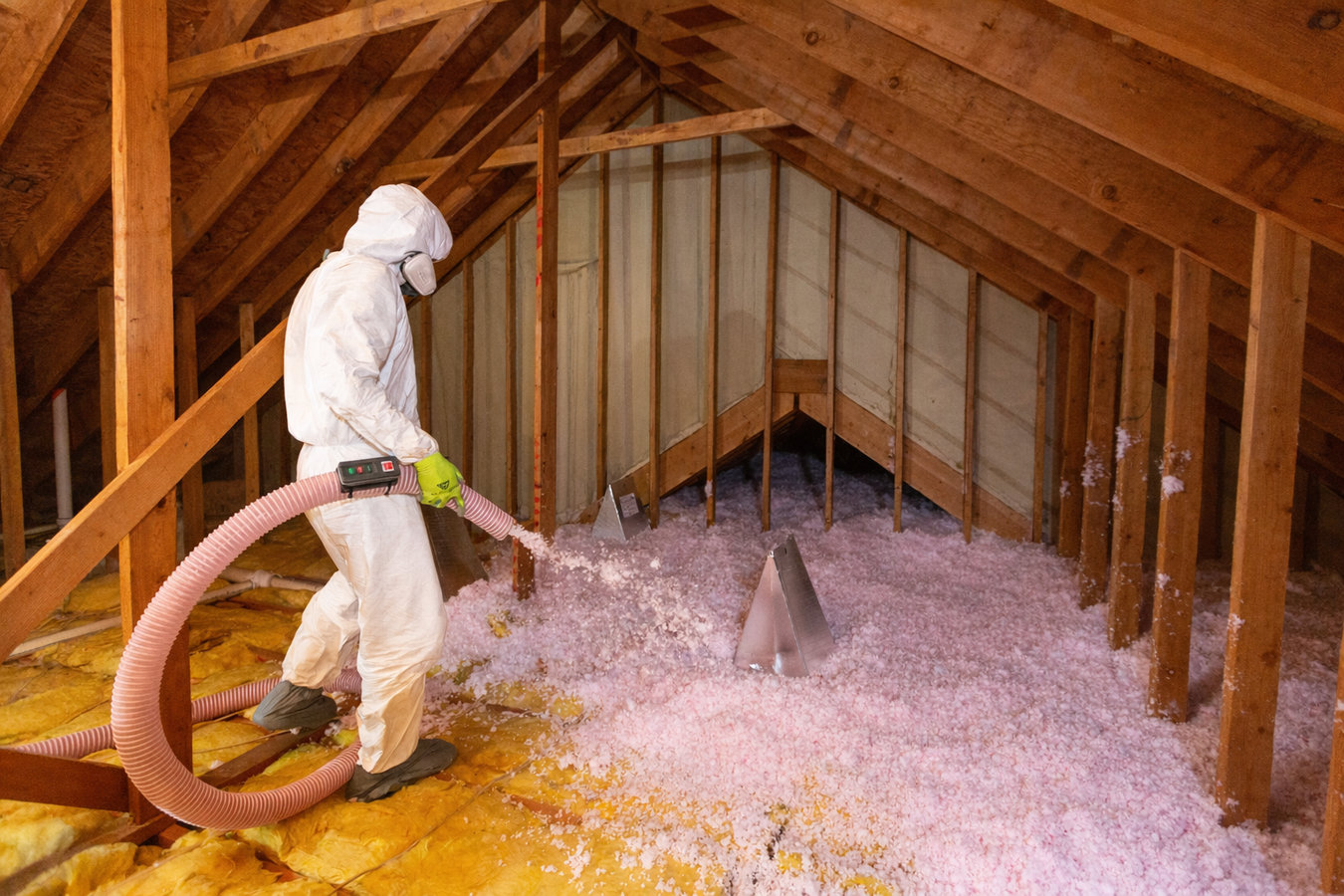
Most Hoopeston attics have original loose-fill or fiberglass batt that has settled and degraded over a century of hard Illinois winters. Our blown-in insulation fills around rafters, old wiring, and floor obstructions that batt cannot conform to, bringing older two-story homes up to current R-49 depth across the full attic floor.
Hoopeston homes with full basements often have an uninsulated, unencapsulated crawl space or exposed rim joist area that lets cold air pour in along the foundation perimeter. Insulating this zone in combination with vapor barrier work addresses both cold floors and the ground moisture that Vermilion County clay soil drives into the wood framing year-round.
The two-story wood-frame homes common throughout Hoopeston have rim joists and band joists that are nearly impossible to seal with batt or blown-in material. Closed-cell spray foam bonds to the framing and blocks both air infiltration and heat loss at the perimeter - one of the most impactful upgrades for a pre-1950 home in this climate.
The flat terrain around Hoopeston keeps rainwater near foundation perimeters for days after a storm, and many older homes here have stone or brick foundations that absorb ground moisture more readily than poured concrete. A properly installed vapor barrier cuts that moisture pathway before it reaches the wood subfloor and framing above.
Century-old Hoopeston homes have accumulated gaps at every penetration point - plumbing chases, chimney bypasses, attic hatches, and top plates that were never air-sealed when the house was built. Closing those pathways before adding blown-in insulation is what produces real performance from the upgrade rather than just adding depth on top of a leaky envelope.
Hoopeston homes are almost universally built on full basements, and those below-grade spaces account for significant heat loss when walls and sill plates are left uninsulated through a Vermilion County winter. Insulating the basement perimeter walls and rim joist area reduces both heating costs and the cold floors that residents often notice most on the first story above.
A large portion of Hoopeston homes were built in the late 1800s and early 1900s, when insulation meant sawdust or nothing at all. These two-story wood-frame houses - the dominant style in the city - were built well, but they were never designed to meet the energy performance standards we expect today. Many still have their original materials: plaster walls, single-pane windows that have since been replaced, and attics that were never properly insulated even after the building was modernized in other ways. Median home values in Hoopeston are modest, which means owners often address one visible problem at a time and insulation - being invisible - gets pushed to the back of the list until the heating bills make it impossible to ignore.
The climate in east-central Illinois is hard on old houses. USDA hardiness zone 5b means winter lows regularly drop below 0 degrees Fahrenheit and ground frost in Vermilion County reaches 30 to 40 inches in a hard winter. Those repeated freeze-thaw cycles from November through March work against every unprotected foundation, crawl space floor, and basement wall in Hoopeston. Add in the persistent summer humidity that runs from June through August and the flat terrain that keeps rainwater sitting near foundations after spring storms, and you have a climate that demands more from insulation and moisture control than most homeowners realize until damage has already occurred.
Our crew works throughout Hoopeston regularly as part of our Vermilion County service area, and we understand the local conditions that affect insulation work here. The homes near McFerren Park and the Hoopeston Area school campus are some of the oldest in the city - two-story wood-frame houses with gabled roofs and full basements that are nearly always the first in line for an insulation upgrade when owners start comparing their heating bills to neighbors in newer construction. The practical, budget-conscious mindset of most Hoopeston homeowners means we show up with honest assessments and clear options, not upsells.
Hoopeston sits about 10 miles west of the Indiana state line and roughly 20 miles north of Danville. We serve this area without the long travel delays or minimum-job restrictions you might run into with contractors based in Champaign or Terre Haute. Homeowners in Rantoul to the southwest are a short drive away, and our crews cover that corridor regularly as well.
Call us or fill out the contact form and we will respond within one business day. We serve Hoopeston as a regular stop in our Vermilion County schedule, so scheduling is straightforward.
We visit the property and assess the attic, crawl space, basement, and rim joists in person. You get a written estimate that covers exactly what needs to be done and what it will cost before any work begins - no surprises on the invoice.
Our crew arrives on the scheduled day and handles the full scope - air sealing, blown-in insulation, spray foam, vapor barrier, or whatever combination was agreed upon. Most projects in a typical Hoopeston home are completed in a single day.
Before we leave, we walk through the completed work with you so you can see exactly what was done and where. If any questions come up after we are gone, we are reachable and will come back.
We serve Hoopeston homeowners throughout Vermilion County. No travel fees, no minimum job requirements - call or submit a request and we will get back to you within one business day.
(217) 444-0284Hoopeston is a city of around 5,200 residents in the far eastern part of Vermilion County, roughly 10 miles from the Indiana state line. The city grew quickly in the late 1800s on the strength of agriculture and food processing - Hoopeston was once a major center of the canning industry in Illinois, and that heritage is still celebrated every Labor Day weekend at the National Sweetcorn Festival, one of the most well-known community events in the region. The housing stock that grew up around that industrial era is largely intact: two-story wood-frame houses with full basements, front porches, gabled roofs, and original brick or stone foundations are the dominant residential style throughout the older downtown neighborhoods.
Most Hoopeston residents are long-term owner-occupants with a practical view of home maintenance - they want reliable work at a fair price, and word of mouth matters in a community this size. The nearest larger city is Danville, about 20 miles south, and many residents commute there for work while keeping roots in Hoopeston. Homeowners in nearby Savoy and across the broader Champaign-Urbana corridor are also part of our regular service territory, but Hoopeston and Vermilion County remain our home ground.
Creates an airtight seal that dramatically cuts heating and cooling costs.
Learn MoreFills irregular spaces evenly for complete whole-home thermal coverage.
Learn MoreComprehensive insulation solutions that improve comfort throughout your home.
Learn MoreProtects your floors from cold drafts and moisture coming from below.
Learn MoreInsulates basement walls and rim joists to reduce heat loss and drafts.
Learn MoreHigh-density foam offering superior R-value and moisture resistance.
Learn MoreEnergy-efficient insulation solutions designed for commercial buildings.
Learn MoreBlocks ground moisture from entering your crawl space and living areas.
Learn MoreProfessional vapor barrier installation to protect your structure from moisture.
Learn MoreOlder homes in Hoopeston are losing heat every winter through attics, crawl spaces, and rim joists that have never been properly insulated - call today for a free on-site estimate before the next heating season arrives.